

Execution among forex broker services is in the spotlight once again for the coming month, thanks to the spike in the volatility of the U.S. dollar that followed the September interest rate decision of the Federal Reserve and which will provide traders with a real-time stress test on just how efficiently their brokers are executing their orders during times of rapid market movement.
With the Fed hiking its key interest rate by 0.25% on September 16, marking its first increase since 2023, along with additional hawkish statements by the regional presidents of the Fed, the dollar experienced its strongest month in over a year. This is precisely the type of market environment where execution among forex broker services tends to be differentiated.
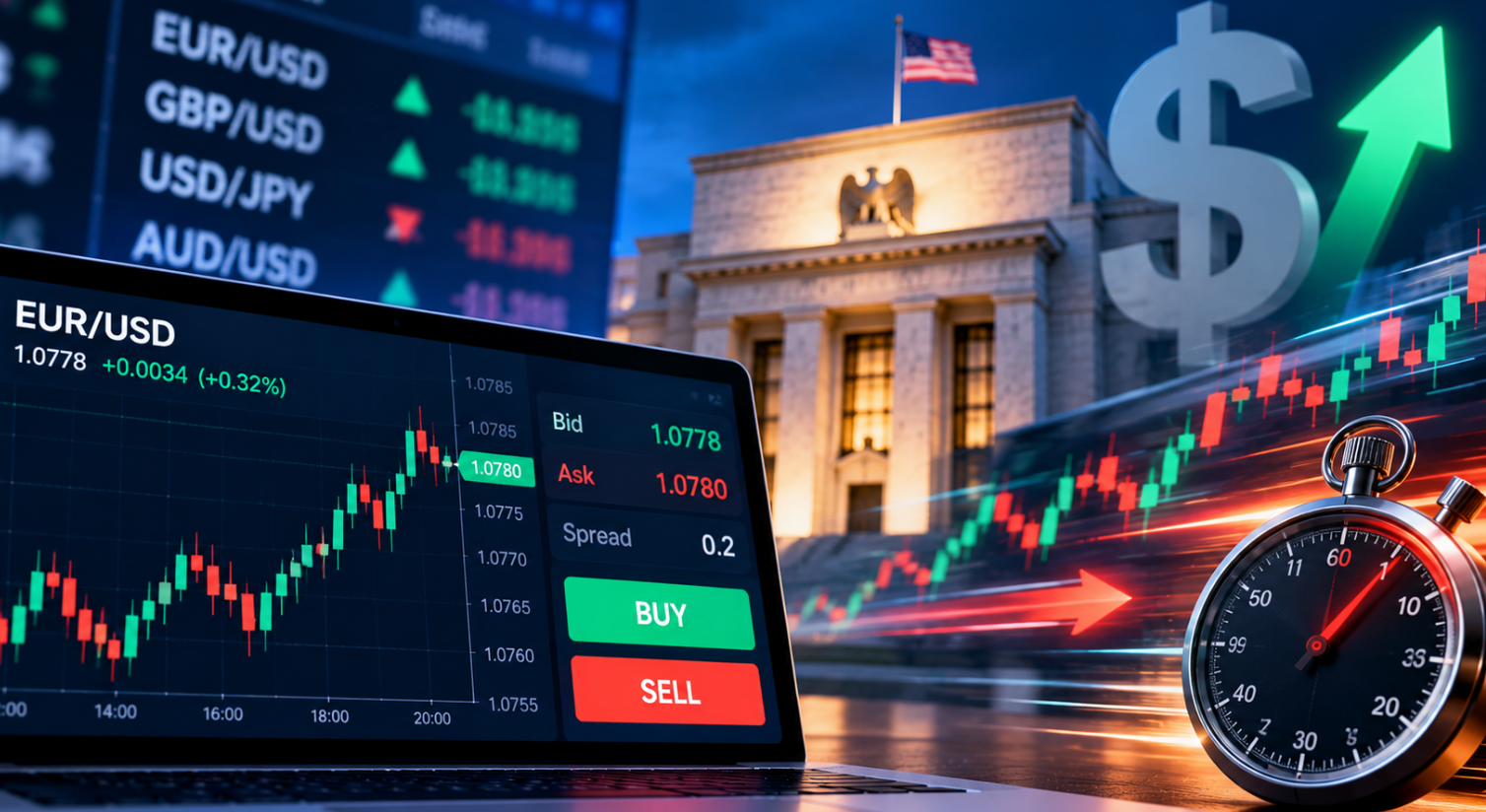
An independent test performed by companies monitoring the execution speed of forex broker transactions in the industry in 2026 has revealed a large variation in the performance results. Some ECN-like brokers have been found to provide average market order fills within the 70-90 millisecond range, while some of the slowest brokers in the industry have been known to execute orders longer than 150 milliseconds, accompanied by increased slippage in volatile periods. This difference may not seem too big at first, but in fact, it becomes quite significant for traders working with fast and strict strategies, where a few additional milliseconds may affect the fill price significantly.
The difference in execution models becomes increasingly important for traders in this regard. ECN and STP brokers generally route orders to external liquidity providers rather than taking the opposite side of the trade, while market makers may internalize client orders. Execution quality can vary between brokers and market conditions, particularly during periods of high volatility when spreads and slippage may increase. Market makers can often provide fast fills under normal conditions, while ECN and STP execution depends on available liquidity and the performance of connected providers. Traders can also explore BrokerVS for additional information about forex broker execution models and trading conditions.
Brokers have responded to this renewed focus on forex broker execution by leaning harder into their infrastructure claims — colocated servers near major liquidity hubs, direct connections to institutional-grade data centers, and published execution benchmarks have all become more common selling points in broker marketing over the past year. Firms known for scalping and algorithmic trading support have specifically highlighted low-latency connectivity as a competitive differentiator, since high-frequency strategies depend on execution speed more heavily than most retail trading styles.
For everyday traders, the renewed volatility serves as a useful reminder that advertised execution numbers do not always hold up identically in live, fast-moving conditions. Testing organizations that benchmark forex broker execution performance typically measure both limit and market order speeds separately, since the two can behave quite differently. A broker that is fast on limit orders is not necessarily equally fast on market orders, and vice versa. Traders can also explore BrokerReviewshub for additional information about forex brokers, execution, and trading conditions.
With the Fed’s rate path still not fully settled — its own projections point to the possibility of at least one more increase before year-end — traders should expect further bursts of volatility in the months ahead. Industry analysts tracking forex broker execution performance suggest this makes it a good moment for traders to actually test their own broker’s real-world execution during active news windows, rather than relying solely on advertised averages, since live market conditions remain the most reliable way to judge how a platform actually performs when it matters most.
Frequently Asked Questions
Why does forex broker execution matter more during volatile markets?
Because prices move faster during volatility, meaning any delay between placing and filling an order increases the chance of getting a different price than expected.
What’s the difference between ECN and market maker execution?
ECN brokers route orders directly to external liquidity providers, while market makers typically fill orders internally — each model behaves differently under fast-moving conditions.
How is forex broker execution speed usually measured?
Independent testing organizations typically measure average execution time in milliseconds, tracking limit and market orders separately across different market conditions.
Can advertised execution speeds differ from real trading conditions?
Yes. Advertised averages are often based on normal conditions, while execution during high volatility can behave differently, which is why live testing matters.
What should traders do to check their broker’s execution quality?
Compare expected versus actual fill prices during both calm and volatile periods, and review independent broker execution testing data where available.


